2026-06-25
Best Open Source AI Models 2026: Choose by Workload
Compare GLM-5.2, DeepSeek V4 Flash, Kimi K2.6, MiniMax M3, Qwen3.5, and Gemma 4 by license, modality, footprint, and a fair workload pilot.
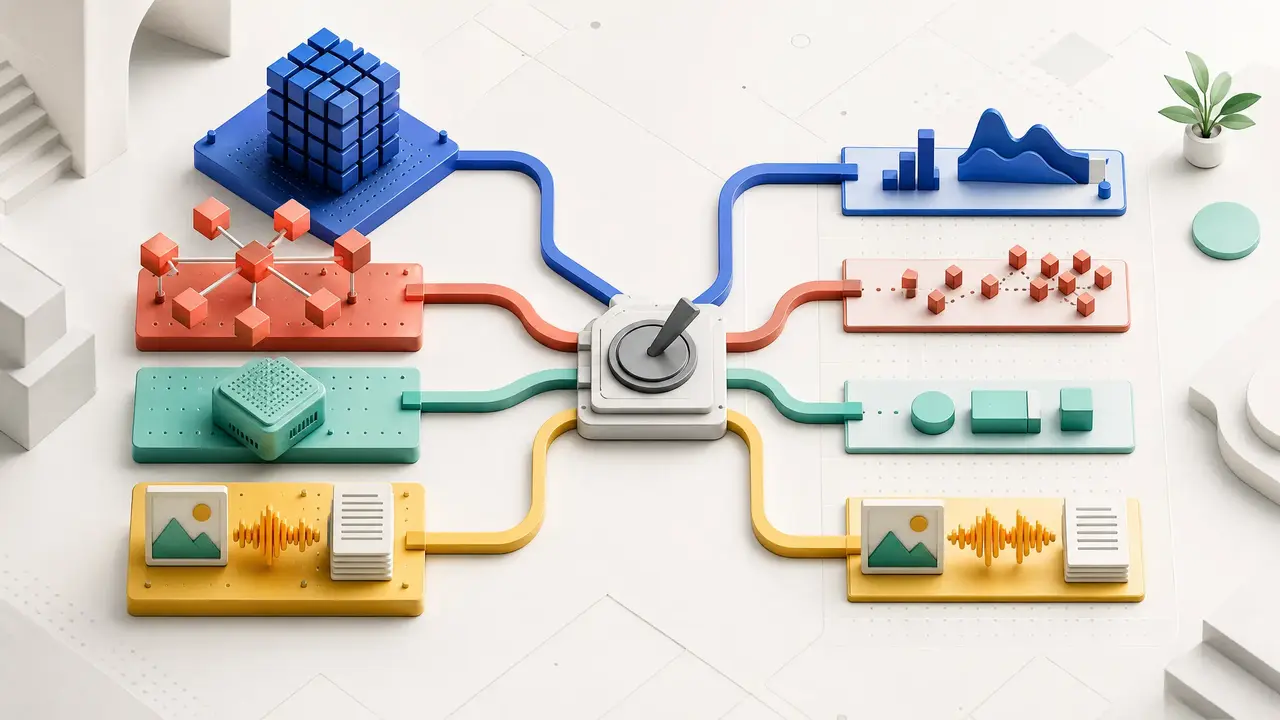
A list of the “best open source AI models in 2026” breaks as soon as procurement asks its first useful question: best for which input, under which license, on whose hardware, and judged by which failures? A million-token text model, a compact multimodal model, and a trillion-parameter mixture-of-experts model are not three runners in one race. They are different pieces of infrastructure.
A fresh source pass on 22 July 2026 fetched the official model cards and machine-readable configurations for six current candidates: GLM-5.2, Kimi K2.6, MiniMax M3, DeepSeek V4 Flash, Qwen3.5 35B-A3B, and Gemma 4 12B. All six cards and configs returned HTTP 200. Thirty claim anchors and six context values matched. The result is a shortlist, not a synthetic leaderboard.
The distinction matters because the word open hides four license labels in this small sample alone: MIT, Modified MIT, the MiniMax Community License, and Apache 2.0. It also hides two input contracts, a fourfold spread in declared context, and a vast difference between total and activated parameters. Treat “open source” as a search phrase; treat the exact license and artifact as the buying contract.
The decision in one page
For long-horizon text and coding pilots, start with GLM-5.2 and DeepSeek V4 Flash. Both publish million-token configurations and MIT licenses. GLM-5.2’s card emphasizes sustained long-horizon work and documents current vLLM and SGLang paths. DeepSeek publishes a much more explicit footprint for V4 Flash—284B total, 13B activated—and three reasoning-effort modes. Neither card proves that the model will survive your repository, tool schema, or latency budget.
For visual browser, interface, or document work, compare Kimi K2.6 with MiniMax M3. Kimi declares 256K context, native vision, 1T total parameters, and 32B activated. MiniMax declares native image and video input, one million tokens, roughly 428B total, and roughly 23B activated. Their licenses are not the same, and their vendor benchmarks are not a common test harness.
For a smaller multimodal deployment, put Qwen3.5 35B-A3B and Gemma 4 12B on the same local pilot. Qwen activates 3B of 35B parameters and publishes native tool-calling guidance. Gemma is an 11.95B dense model; Google says the 12B release is designed for laptop-class deployment and publishes Apache 2.0 terms. That is an operationally meaningful comparison. Calling either one “best” without a memory, latency, and correction budget is not.
Prerequisites before ranking
| Candidate | License label | Declared context | Total / activated | Input contract | First workload to test |
|---|---|---|---|---|---|
| GLM-5.2 | MIT | 1,048,576 | Not stated on the current card | Text | Repository-scale coding with long retained state |
| DeepSeek V4 Flash | MIT | 1,048,576 | 284B / 13B | Text | Reasoning and coding under a capped compute budget |
| Kimi K2.6 | Modified MIT | 262,144 | 1T / 32B | Text and vision | Browser work where screenshots alter the decision |
| MiniMax M3 | MiniMax Community | 1,048,576 | ~428B / ~23B | Text, image, and video | Long multimodal documents or recorded UI flows |
| Qwen3.5 35B-A3B | Apache 2.0 | 262,144 native | 35B / 3B | Text and vision | Multilingual tool use with constrained serving cost |
| Gemma 4 12B | Apache 2.0 | 262,144 | 11.95B / 11.95B | Text, image, and audio | Local multimodal inference on consumer hardware |
Those numbers are model-card declarations, not measurements from one neutral lab. “Context” means the configuration accepts that many positions; it does not promise useful recall at the far end, stable tool behavior, or affordable KV cache. “Activated parameters” helps explain a mixture-of-experts serving profile, but it is not a direct proxy for VRAM, tokens per second, or quality.
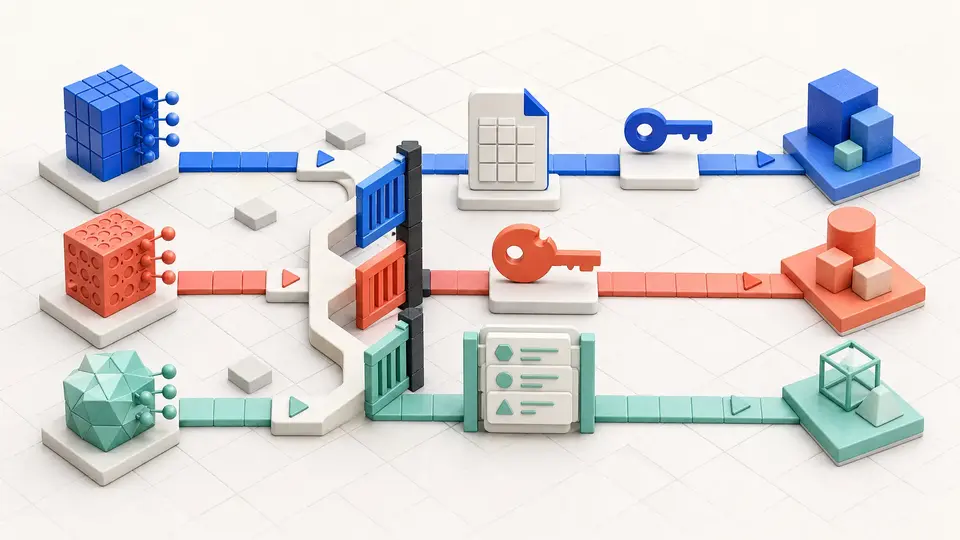
Two million-token text candidates, with different evidence
GLM-5.2’s strongest documented reason to enter a pilot is not a single benchmark cell. It is the combination of a one-million-token configuration, an MIT license, several documented serving frameworks, and an explicit focus on long-horizon work. That bundle makes it a credible candidate for repository analysis, code changes that span many files, or research tasks that retain a large evidence packet.
The caution is equally concrete. The current Hugging Face card does not restate the total and activated parameter counts in its introduction. A buyer should not quietly import those numbers from an old launch recap and pretend the card supplied them. More importantly, the card’s coding results use named harnesses, model-specific prompts, token limits, and sometimes external judges. They describe the vendor’s evaluated setup. They do not predict your patch acceptance rate.
DeepSeek V4 Flash offers a different kind of clarity. Its card states 284B total parameters, 13B activated, a one-million-token context, mixed FP4/FP8 weights, and three reasoning modes. That makes a cost-and-latency hypothesis easier to write down: Flash may be the better first test when a team wants million-token capacity but cannot justify a much larger active footprint.
It remains a hypothesis. DeepSeek’s own table calls one mode “Max” and compares several models under different effort settings. The honest test holds the task, tool interface, timeout, and acceptance rule constant. If Flash needs twice the wall time or three repair loops to equal another model’s accepted patch, its smaller active parameter count has not automatically won the workload.
Kimi K2.6 and MiniMax M3 are multimodal scale candidates
Kimi K2.6 belongs on the visual-agent shortlist because vision is part of the base contract, not an adapter implied by marketing copy. Its card declares a 400M-parameter vision encoder, 256K context, 1T total parameters, and 32B activated. It also publishes examples and results around coding-driven design, browser use, and long agent runs. For a workflow where screenshots, rendered state, or visual regressions change the next action, that is more relevant than a text-only reasoning score.
The modified MIT label deserves its own review. It is not enough to see the word MIT in a badge and copy “permissive” into a procurement memo. Legal review should bind the exact license file and model revision that will be deployed. If the terms do not fit the product or region, Kimi leaves the shortlist regardless of its benchmark position.
MiniMax M3 pushes the other axis: the official card combines native text, image, and video input with one million tokens. It declares roughly 428B total and 23B activated parameters, then attributes its long-context efficiency to MiniMax Sparse Attention. This is the candidate to test when one job genuinely crosses a long document set, images, and recorded interface state.
It is also the easiest model here to overspecify. A million-token multimodal context is wasted if the production job contains a 30-page document and two screenshots. The MiniMax Community License adds a separate approval question. The appropriate pilot is not “can M3 answer a large prompt?” It is “does M3 reduce retrieval, preprocessing, or handoff failures enough to repay its deployment burden?”
Verify compact multimodality: Qwen3.5 35B-A3B against Gemma 4 12B
Qwen3.5 35B-A3B is the most interesting routing candidate in this set. Its card states 35B total parameters but only 3B activated, native 262,144-token context, vision input, 201 languages and dialects, and explicit tool-calling support. That combination suggests a practical role: multilingual document or interface work where a large dense model would be excessive.
The extension claim—context beyond the native window—should stay out of the first pilot. Use the native 262,144-token contract until the long-context method, memory cost, and quality degradation are measured. An advertised extension is not free capacity.
Gemma 4 12B makes a different promise. It is dense rather than sparse, supports text, image, and audio, and uses a unified encoder-free design. Google’s release post says the model can run on laptop-class hardware with 16GB of memory. The model card documents 256K context and Apache 2.0 terms. That makes Gemma a serious local candidate for audio transcription plus reasoning, document triage, or an offline assistant—not a consolation prize for teams that cannot host a frontier-scale model.
Qwen and Gemma should be compared on the same device, not on headline parameter arithmetic. Qwen activates fewer model parameters, while Gemma’s dense unified path may simplify the local stack for mixed audio and visual input. Measure peak memory, cold start, prefill time, decode rate, and correction rate. The architecture cannot choose for you.
Why vendor leaderboards fail at selection
Every card in this review is a primary source, which is exactly why its benchmark table needs careful handling. The publisher chose the harness version, system prompt, sampling parameters, reasoning effort, tool environment, timeout, and comparison set. Several cards disclose those details well; disclosure improves auditability, but it does not turn separate tables into one league table.
Cross-vendor benchmark arithmetic introduces false precision. A two-point lead is meaningless if one run used a larger thinking budget, another used a different agent harness, and a third supplied tools or search. Even within one card, “high” and “max” reasoning modes can move latency and output length enough to change production economics.
The useful reading is narrower:
- A reported tool benchmark is evidence that the publisher exercised a tool-capable path.
- A long-context benchmark is evidence that the publisher evaluated more than the configuration limit.
- A serving recipe is evidence that a named framework version was considered.
- None of those facts is evidence that your schema, traces, or GPU fleet will pass.
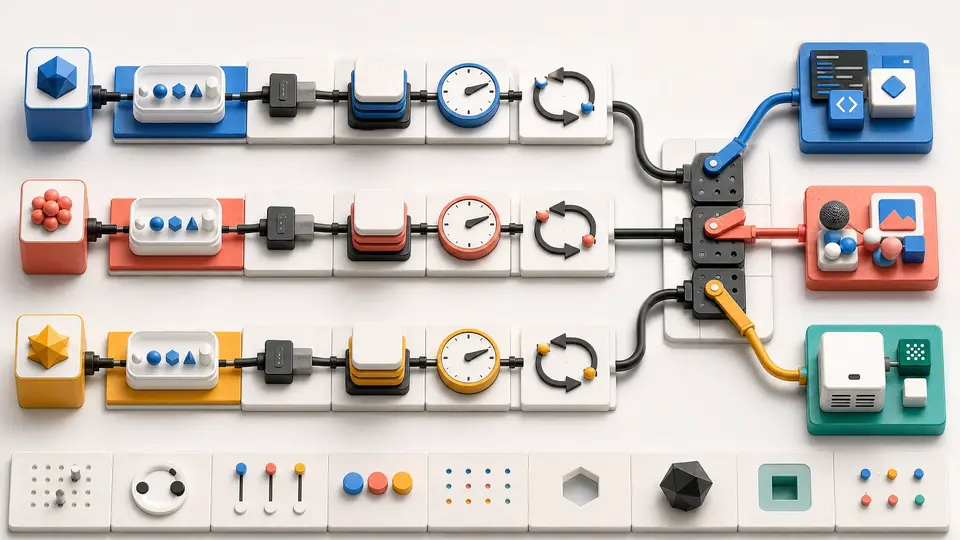
The pilot sheet that turns a shortlist into a choice
Take 30 to 100 recent production traces and remove secrets without removing the failure conditions. Keep the same prompt contract, tools, timeout, and deterministic checks for every model. Record corrections made by the human reviewer; a clean first answer and a fluent wrong answer must not receive the same score.
| Column | What to record | Why it changes the decision |
|---|---|---|
| Artifact identity | Model repository, exact revision, quantization, serving image | Prevents a later weight or runtime change from rewriting the result |
| License verdict | Approved, restricted, or rejected with the reviewed file hash | Stops an ineligible model before engineering time is spent |
| Task acceptance | Deterministic pass plus reviewer reason | Separates useful output from plausible prose |
| Tool contract | Valid calls, schema repairs, duplicate calls, unsafe attempts | Measures whether the model can live inside an agent runtime |
| Context behavior | Input tokens, recall checks, lost constraints, truncation strategy | Shows whether the advertised window helps the actual job |
| Serving envelope | Peak memory, cold start, prefill, tokens per second, p50 and p95 latency | Turns architecture claims into capacity planning |
| Human correction | Minutes, edit type, and whether a rerun was required | Captures the cost hidden by benchmark accuracy |
A model advances only if it clears the license gate, the acceptance threshold, and the serving budget. Do not average a legal rejection into a high quality score. Do not let cheap tokens cancel unsafe tool calls. Hard constraints remain hard.
Where the model stops and the worker begins
None of these weight releases provides production authority, durable task state, scoped credentials, rollback, or an approval boundary. Those belong to the runtime. OpenClaw, for example, can route providers and fallbacks, but the operator still owns the effective tool policy and the evidence that a task succeeded. A model card cannot grant safe shell access.
That separation suggests a sane rollout. Put one capable default and one cheaper or more private specialist behind the same task contract. Pin revisions. Log the selected model with every run. Keep a fallback only when its failure mode is understood; a silent fallback that changes license, locality, or modality is not resilience.
For implementation details, see OpenClaw models and failover. For the infrastructure decision around tools, state, approvals, and observability, see how to test an AI agent platform before ranking it.
References reviewed
- Z.ai: GLM-5.2 model card and configuration
- Moonshot AI: Kimi K2.6 model card and configuration
- MiniMax: MiniMax M3 model card and configuration
- DeepSeek: DeepSeek V4 Flash model card and configuration
- Qwen: Qwen3.5 35B-A3B model card and configuration
- Google DeepMind: Gemma 4 12B model card and configuration
The best open source AI model in 2026 is therefore not a permanent name at the top of a table. It is the exact, license-approved artifact that passes one bounded workload on your hardware with fewer corrections and acceptable failure behavior. Freeze two candidates, run the same traces, and let the rejected tasks—not the launch-day adjectives—choose the route.