2026-05-13
What Is GolemWorkers? The Server Is Managed; the Run Contract Is Yours
Understand what a GolemWorkers AI agent actually provides: managed runtime, persistent tools and context—while you still own authority, verification, and the stop condition.
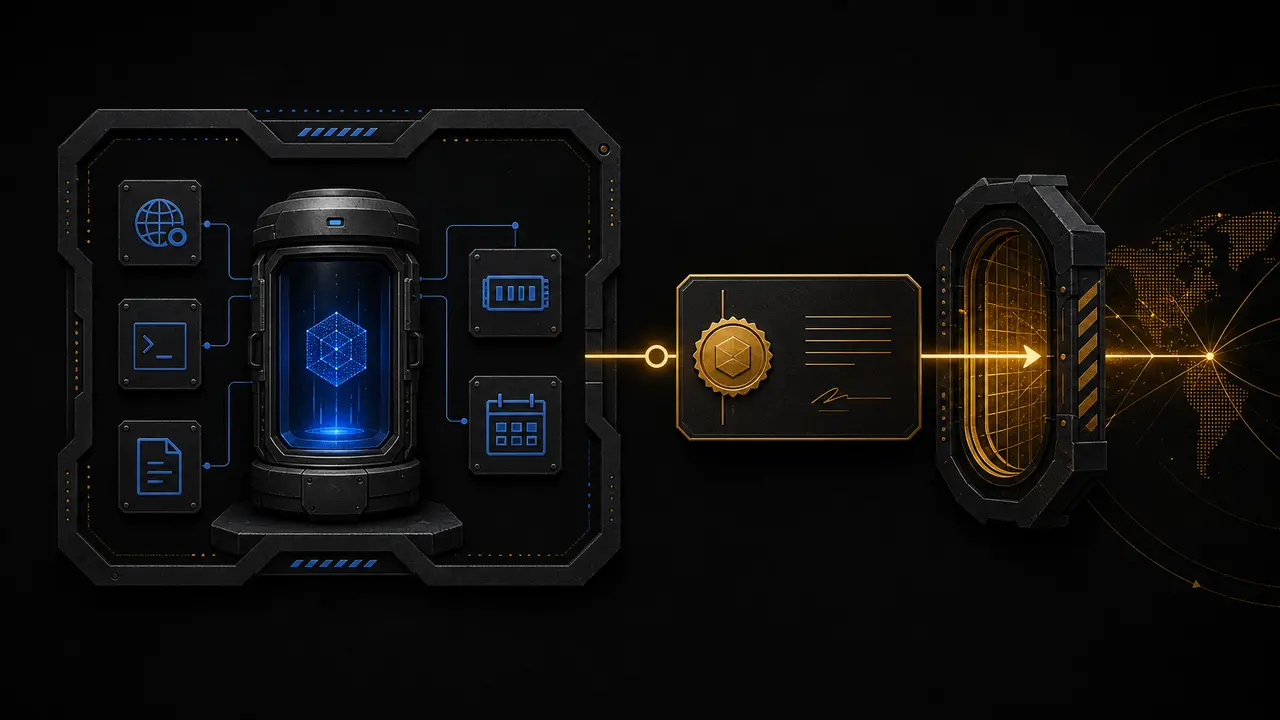
Golem Workers is managed infrastructure for dedicated AI agents. It supplies the place where an agent can keep files, use tools, receive messages, and run later. It does not decide whether “handle customer refunds” is a safe assignment.
That distinction is the useful answer to “what is GolemWorkers?” The service removes a pile of runtime work: provisioning an isolated worker, wiring browser and terminal access, keeping a workspace available, connecting channels, and maintaining scheduled execution. The operator still owns the run contract—input, deliverable, authority, verification, and the condition that ends the job.
Start with the managed boundary
The public product surface describes browser automation, terminal or shell access, files, memory, schedules, messaging, and an isolated or dedicated runtime. Those are execution capabilities. They answer where the work runs and what the environment can expose. They do not answer whether a particular invoice should be sent, a production flag should be changed, or an old schedule should fire again.
Thinking in three ownership columns keeps the marketing phrase “AI agent” from swallowing the operating model.
| Golem Workers manages | The agent configuration defines | The operator or application still owns |
|---|---|---|
| Hosted worker lifecycle and persistent workspace | Available tools, files, channels, schedules, and scoped secrets | The business meaning of a task and the acceptable result |
| Runtime access to browser, terminal, and file surfaces | Which identities and permissions are actually connected | Approval for consequential external effects |
| An environment that can retain working context | Instructions, reusable procedures, and project artifacts | Freshness, verification, rollback, and retention requirements |
| Always-available execution | Triggers and scheduled work | Who owns a missed run, duplicate run, or obsolete schedule |
This is why a managed agent feels different from a blank chat without becoming a digital employee. A chat response can disappear into a tab. A hosted worker can still have the repository, procedure, and output directory tomorrow. That persistence makes recurring operational work possible. It also gives mistakes somewhere to persist.
A task needs a run card, not a job title
“Research competitor pricing” sounds bounded until the agent encounters a login, a rate limit, an old spreadsheet, and a request to email the result. “Keep support under control” is worse: it has no input set, no finish line, and no rule for which messages may leave the company.
A useful first assignment fits on a small run card. The card is not an inspirational role prompt. It is a compact contract that another operator could inspect after the run.
- the input set and its freshness window;
- one concrete deliverable and where the draft may be written;
- the verification read, command, or comparison that closes the task;
- the allowed write surface and the runtime identity using it;
- the schedule owner when the task repeats;
- a stop condition for ambiguity, missing evidence, or failed checks;
- a scoped secret reference rather than a credential pasted into prose.
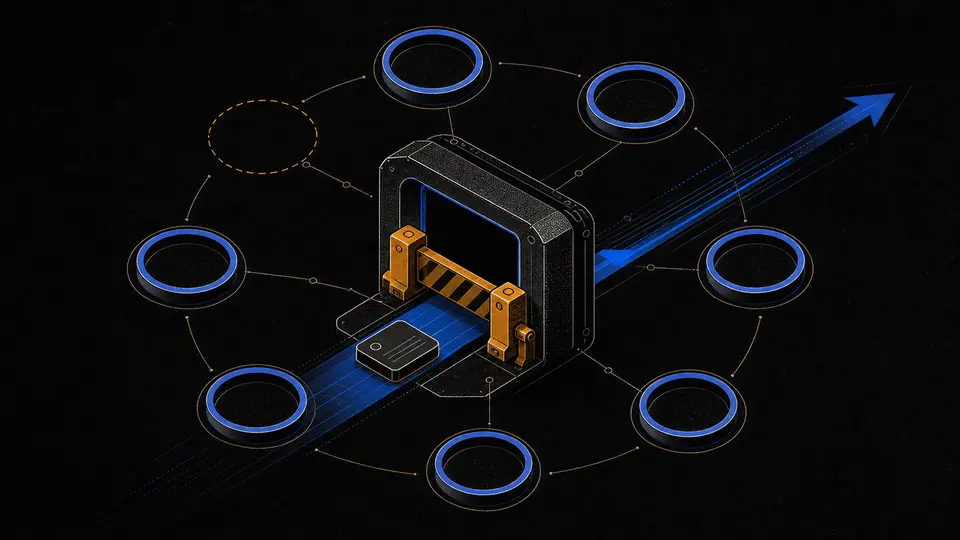
Notice what is absent: a promise that the model will “use good judgment.” Judgment is easier to review when it is attached to evidence and a narrow decision. An agent can rank three options and cite the price pages it opened. The purchasing system should still decide whether a proposed order is within budget and authorized.
What the public surface actually says
A read-only audit for this article opened five current Golem Workers product pages: the home page, AI Agent Builder, AI Agent Hosting, AI Agent Server, and Private AI Agent. All five returned HTTP 200, exposed the expected canonical URL, and contained the capability claims assigned to that page. The observations covered managed or isolated runtime language plus browser, terminal or shell, files, memory, schedules, and always-on execution where advertised.
The same evidence run classified 80 synthetic run cards across ten task families: repository review, support summary, research brief, browser audit, analytics report, backup check, inbox drafting, vendor comparison, content QA, and incident triage. Each family had one bounded baseline and seven deliberately broken variants. All 80 expected classifications matched.
The ten baselines were admitted. Ten cards in each defect family were blocked or held for one missing boundary: deliverable, verification, write scope, runtime identity, schedule owner, stop condition, or secret handling. The fixture ran under Node.js v22.23.1 and has SHA-256 d370a7be90fd7cf287880a0a99ef7bc4cf51b98734e93280b63028a41f057a90.
The boundary matters more than the score.
No account, agent, server, credential, message, schedule, browser session, purchase, API mutation, or customer workload was created. The fixture proves that the recorded admission rules behave consistently and that the five public pages carried the observed claims at the audit time. It does not prove task success, model quality, or production reliability for an untested workload.
Testing the boring first run
A first GolemWorkers AI agent task should be small enough that failure is cheap and verification is obvious. A read-only repository inventory is better than “maintain the codebase.” A five-ticket summary is better than “run support.” A broken-link report is better than permission to rewrite the site.
One practical trial is a source-bound status brief. Give the worker two approved sources, a 24-hour window, an output path, and a rule that external messages remain drafts. Require the brief to quote its evidence, separate unknowns from findings, and stop if either source is unavailable. Run it twice with changed input. Then restart the working session or worker and confirm that only the intended procedure and artifacts survive.
The second run is more informative than the first. The first proves that the model can produce a plausible artifact. The second exposes stale files, implicit defaults, duplicate writes, and instructions that only worked because the initial context happened to be friendly.
Only after that should the workflow acquire a schedule.
The schedule needs an owner, a timeout, a maximum frequency, and a place where failures are visible. If the output is supposed to trigger a remote write, add an idempotency key and a reconciliation read before retry. Hosting makes the run available; it cannot make an external system transactional.
Failure modes in an always-on worker
Persistence preserves mistakes too.
Files and memory let an agent reuse a checked procedure instead of reconstructing the job from a fresh chat. Sessions provide conversational continuity. Scheduled work lets a bounded check happen when nobody is typing. Those features compound useful context—and outdated assumptions.
A supplier list can outlive the contract that created it. A browser profile can retain a session with more authority than the current task needs. A schedule can keep running after its recipient changes teams. A workspace note can state a price or endpoint that was correct last month. Persistent state should therefore carry provenance, scope, and an expiry rule where the fact can become wrong.
Approval should bind the proposed effect
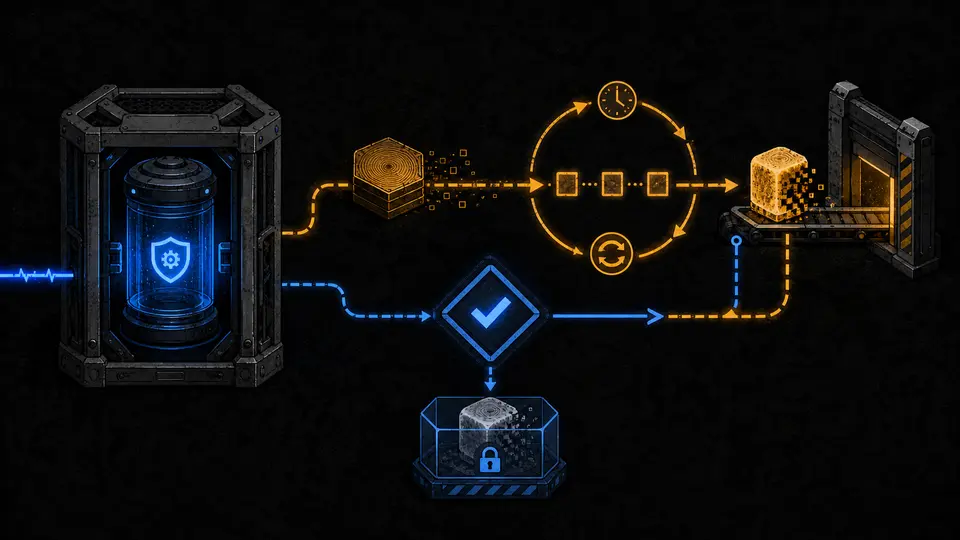
A confirmation such as “shall I proceed?” is weak when the target and arguments are hidden. For a consequential action, the review item should name the exact record, old value, proposed value, identity, destination, and artifact digest. If those parameters change, approval expires. The agent may prepare the change and the evidence; a narrower application boundary should perform the commit.
OpenClaw documents the separation between sandboxing, tool policy, and elevated execution. Sandboxing controls where tools run. Tool policy controls which tools are available, with deny rules winning. Elevated mode changes an execution boundary; it does not create new tools or bypass policy. Golem Workers can host that stack, but the operator must still choose a policy that matches the run card.
Buy the runtime; keep the decision
Management stops at the decision boundary.
Golem Workers is a sensible fit when the missing piece is an available agent environment rather than another chat tab: persistent files, configured tools, browser and terminal access, messaging, and scheduled work on managed infrastructure. It reduces the setup and maintenance needed to keep that environment ready.
It is not a substitute for defining the workload. The most reliable adoption path is one read-only task, one visible artifact, one verification method, and one named owner. Expand from evidence gathering to proposed changes before expanding to direct writes. Keep payment, publication, production changes, deletion, and access grants behind exact application gates.
The server can be managed. The model can be capable. The worker can be online all week. None of those facts owns the decision to act. That remains in the run contract—and that is where a useful AI agent stops being a demo and becomes an operable part of the toolchain.
Sources
- Golem Workers: Create and deploy AI agents
- Golem Workers: AI Agent Builder
- Golem Workers: AI Agent Hosting
- Golem Workers: AI Agent Server
- Golem Workers: Private AI Agent
- OpenClaw: Session management
- OpenClaw: Sandbox versus tool policy versus elevated
- OpenClaw: Scheduled tasks
- OpenClaw: Background tasks